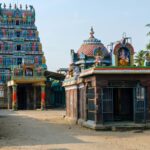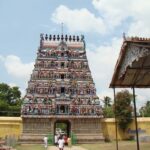
Thirunageswaram is located near Kumbakonam and is dedicated to Lord Shiva as Naganathaswamy. Naganathar Temple is one of the famous navagraha temples people visit with curiosity, not just belief.
Most devotees come here to perform rahu dosha pariharam. But unlike other Navagraha temples, this place has its unique thing that people wait in a queue to see.
This is also a Paadal Petra Sthalam, meaning it has been praised in Tevaram hymns by Saivite saints. That alone makes it more than just a planetary temple.
I’ve noticed it every time—people don’t rush out immediately. They stay back for one particular moment.
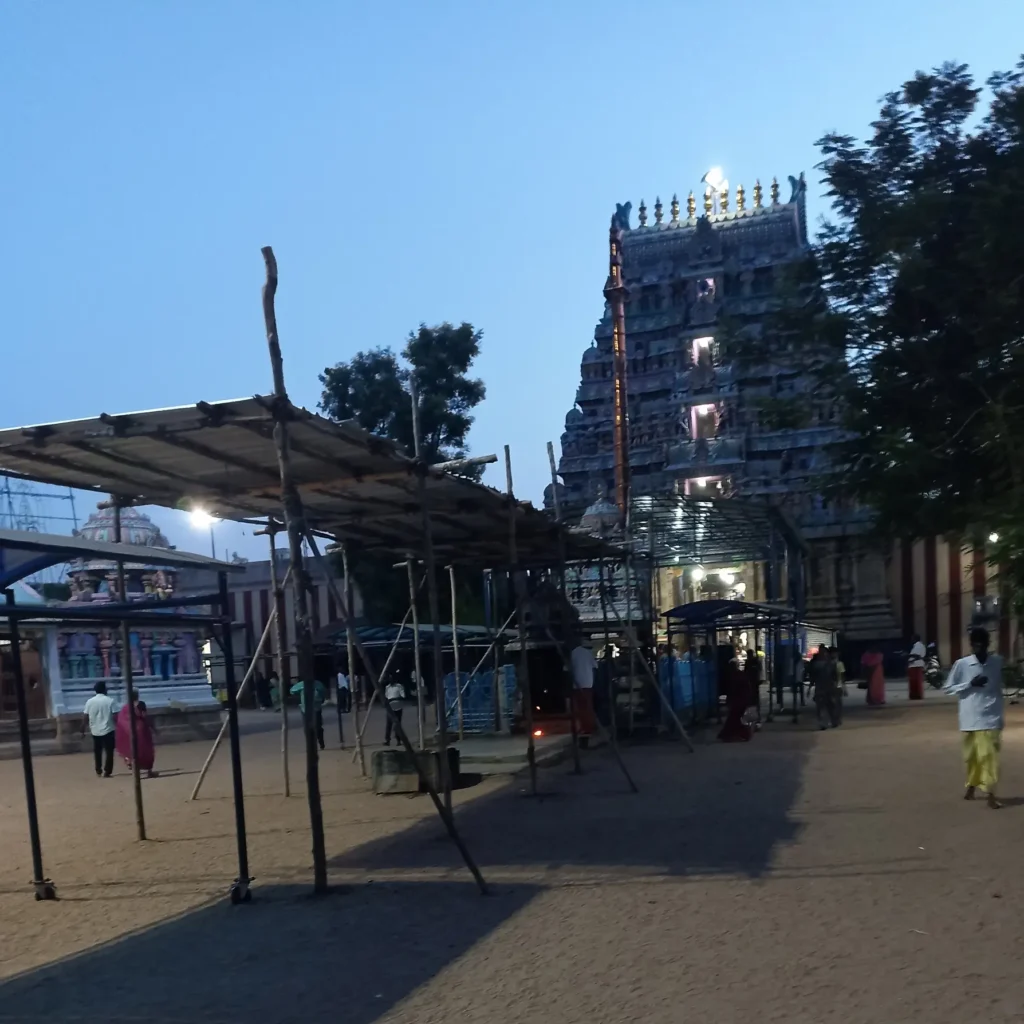
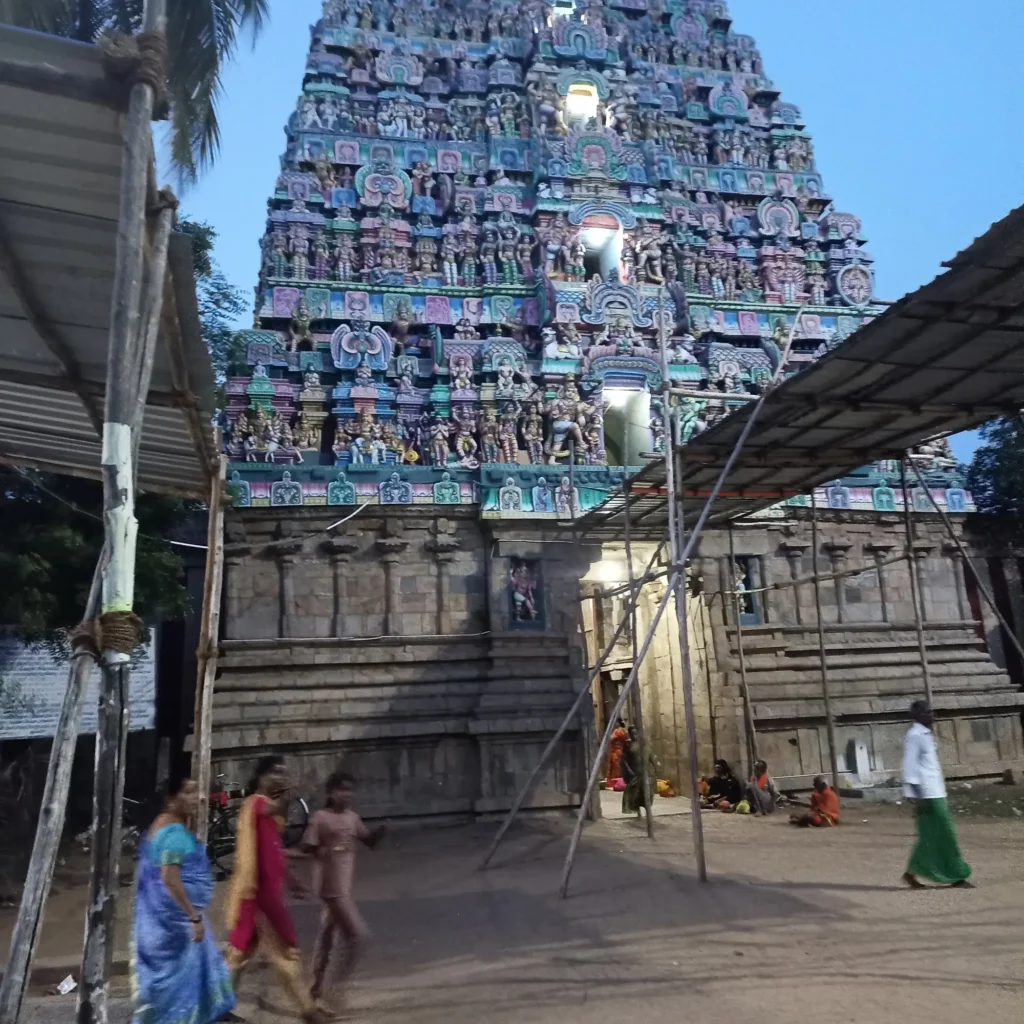
Why is Thirunageswaram Naganathar Temple Known for Rahu?
If Thirunallar is for Shani, Thirunageswaram is for Rahu.
Rahu is usually associated with:
- sudden changes
- confusion or instability
- unexpected rise or fall
That’s why people visit when:
- things feel unpredictable
- decisions don’t seem clear
- life shifts suddenly without reason
But here’s what makes this temple different.
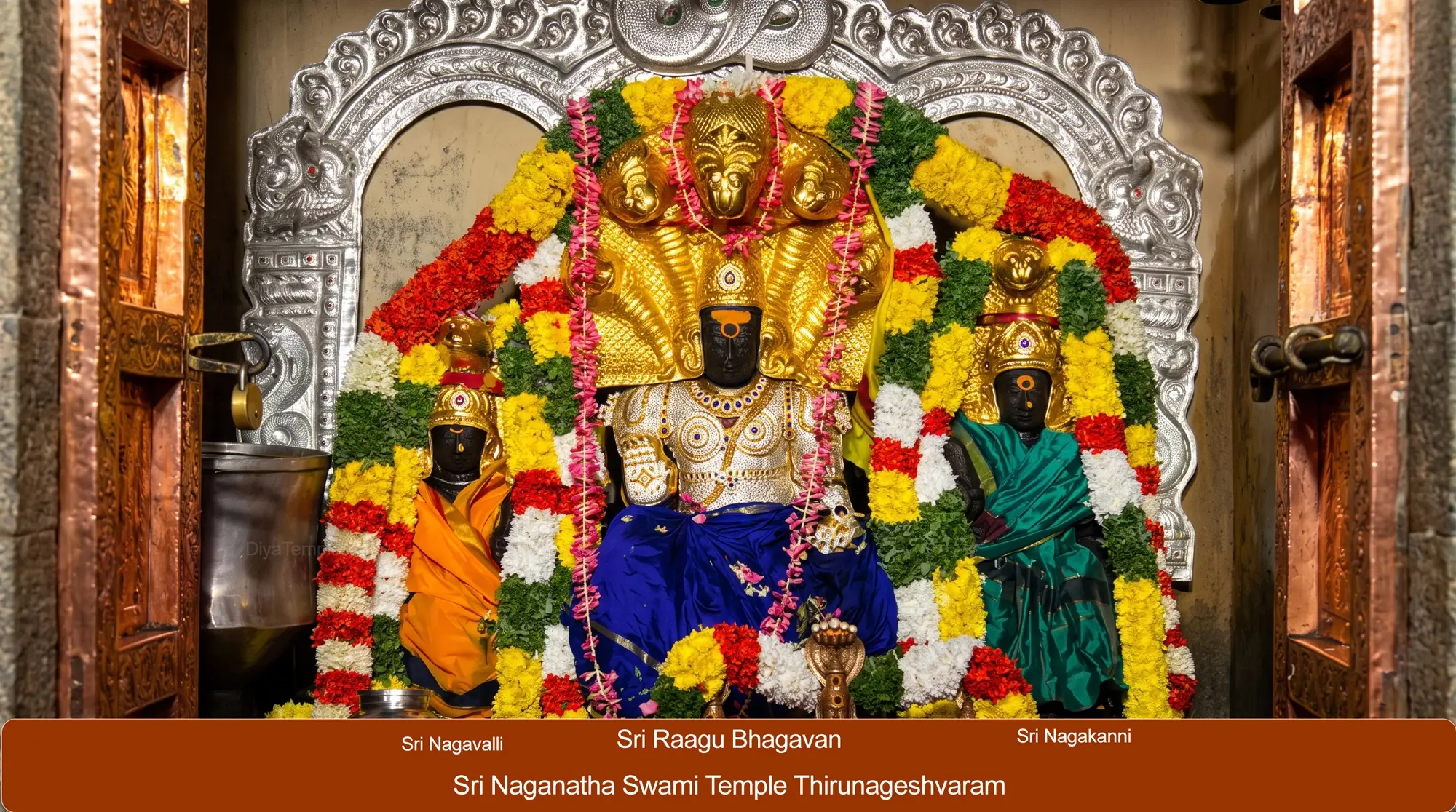
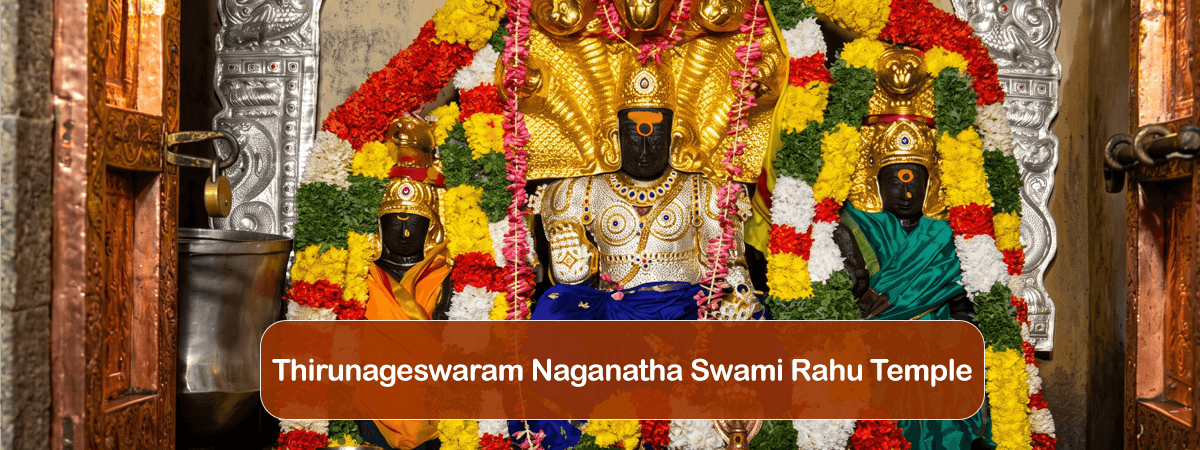
Thirunageshvaram Rahu Bhagavan with His Two Consorts Nagavalli and Nagakanni
The Milk Abhishekam – What Everyone Waits For
During Rahu kalam (time) abhishekam, milk poured over the idol is said to change color from white to blue.
That’s the moment people wait for.
You’ll see it clearly:
- Milk starts white
- Slowly turns bluish as it flows down
Some see it as a miracle.
Some say it’s a chemical reaction.
Either way, the experience pulls attention. Even people who aren’t deeply religious stand and watch.
Not Just Rahu – The Shiva Temple Layer
Like the other Navagraha temples, this is still a Shiva temple first.
The main deity is Naganathaswamy, and Rahu has a separate shrines.
If you only come, watch the abhishekam, and leave—you’re experiencing the full devotional beauty of the temple.
Most locals don’t do that. They complete the full temple circuit.
Temple Structure and Layout
The temple follows traditional Dravidian architecture:
- Large entrance gopuram
- Multiple inner corridors
- Separate shrine for Rahu
One detail people notice—Rahu is depicted with a human face, which is not common in all temples.
Why People Visit Thirunageswaram
Not just for curiosity.
People come when:
- they feel mentally unsettled
- life seems unpredictable
- there’s a sense of confusion or instability
Rahu is often linked to illusion and uncertainty. So this temple becomes a place where people look for some form of clarity.
Rahu Kalam Timings Table
| Day | Rahu Kalam Timing |
|---|---|
| Sunday | 4:30 PM – 6:00 PM |
| Monday | 7:30 AM – 9:00 AM |
| Tuesday | 3:00 PM – 4:30 PM |
| Wednesday | 12:00 PM – 1:30 PM |
| Thursday | 1:30 PM – 3:00 PM |
| Friday | 10:30 AM – 12:00 PM |
| Saturday | 9:00 AM – 10:30 AM |
Dosha Pariharam Lighting Lamps
Officially confirmed by DiyaTemplesTourTeam at 25th July 2026
| Purpose | Number of Lamps |
|---|---|
| Guru Bhagavan (Jupiter) | 33 Lamps |
| Marriage Obstacles (Thirumana Thadai) | 36 Lamps |
| To Cure Illnesses (Udal Pini Neenga) | 27 Lamps |
| To Excel in Education (Kalviyil Membada) | 48 Lamps |
| Sarpa Dosham (Serpent Affliction) | 48 Lamps |
| To Get Employment (Velai Vaippu Pera) | 72 Lamps |
| Rahu Dosham (Rahu Affliction) | 21 Lamps |
| Boon of a Child (Kuzhandhai Bakkiyam) | 51 Lamps |
| Kalathira Dosham (Spouse/Marriage Affliction) | 108 Lamps |
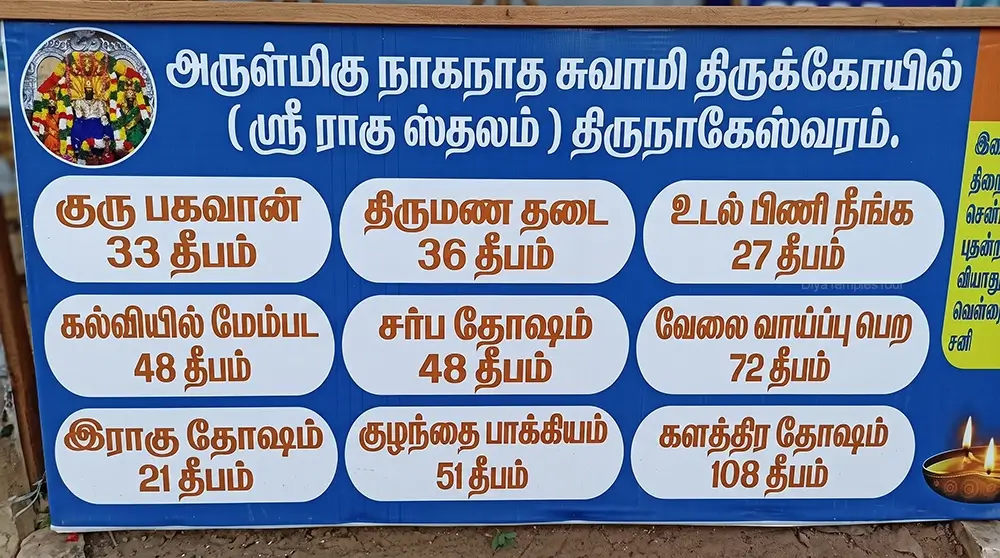
But what really matters here is Rahu Kalam.
That’s when:
- Rahu abhishekam is performed
- Maximum crowd gathers
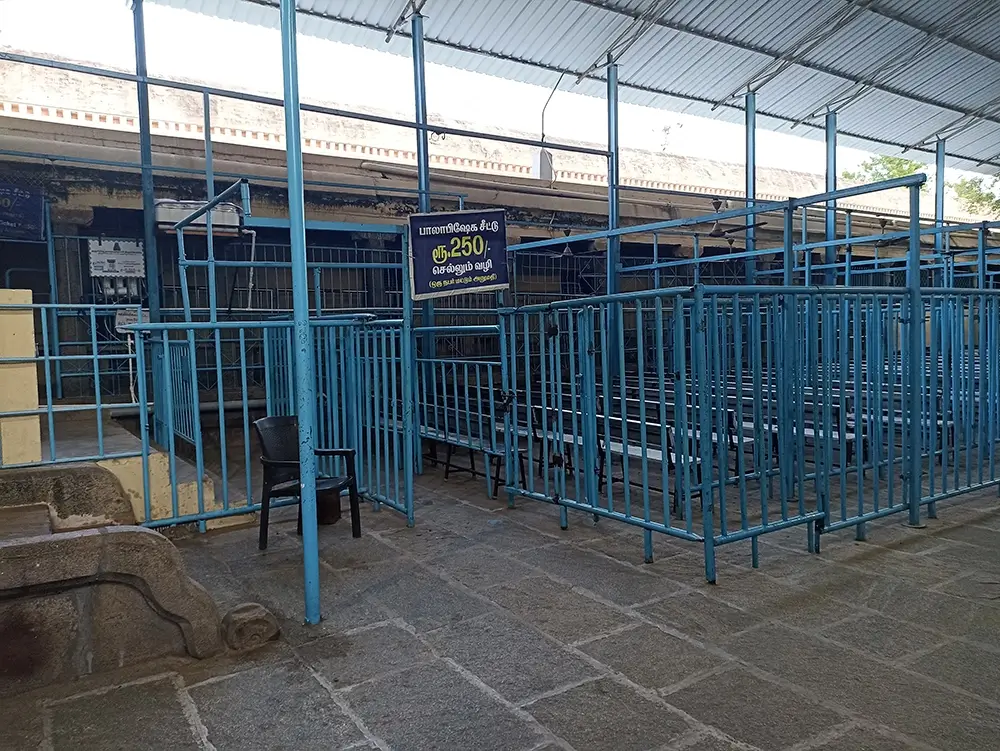
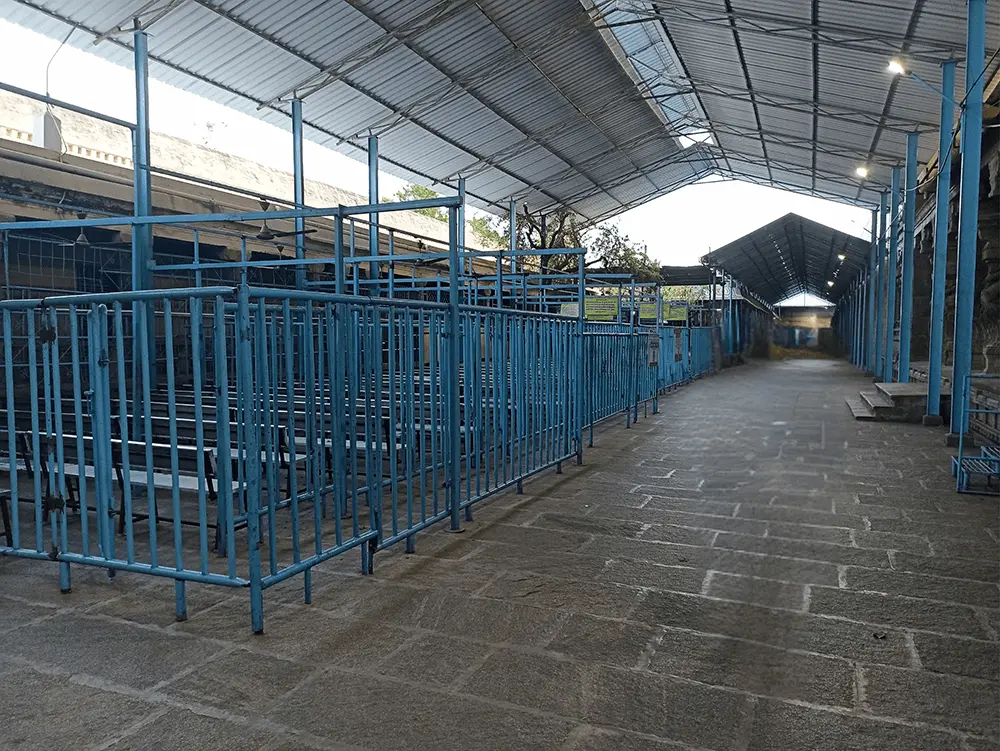
👉 If you want to witness the milk ritual, plan your visit during Rahu Kalam and get special entry ticket of 250 INR per person.
Location and Travel Route
- Around 6 km from Kumbakonam
- Easily accessible by road
- Around 390–400 km from Bangalore
Usually covered along with:
- Kumbakonam temples
- Other Navagraha temples
This is one of the easier temples to access in the circuit.
How to Reach
- By Road: Best and easiest option
- By Train: Kumbakonam (nearest major station)
- By Bus: Frequent local buses available
Most travelers include this as part of a 1-day or 2-day Navagraha plan.
A Small Personal Note
I’ve been here multiple times, mostly with groups.
Every single time, people wait for the abhishekam.
Even those who don’t usually show interest stand and watch quietly when the milk starts changing color.
It’s one of those moments where the entire crowd pauses for a bit.
Also while entering the temple try to visit the place dedicated for “Sri Girigujambigai (Goddess Parvati)“. You can find some interesting stories narrated with images and pictures on the wall.
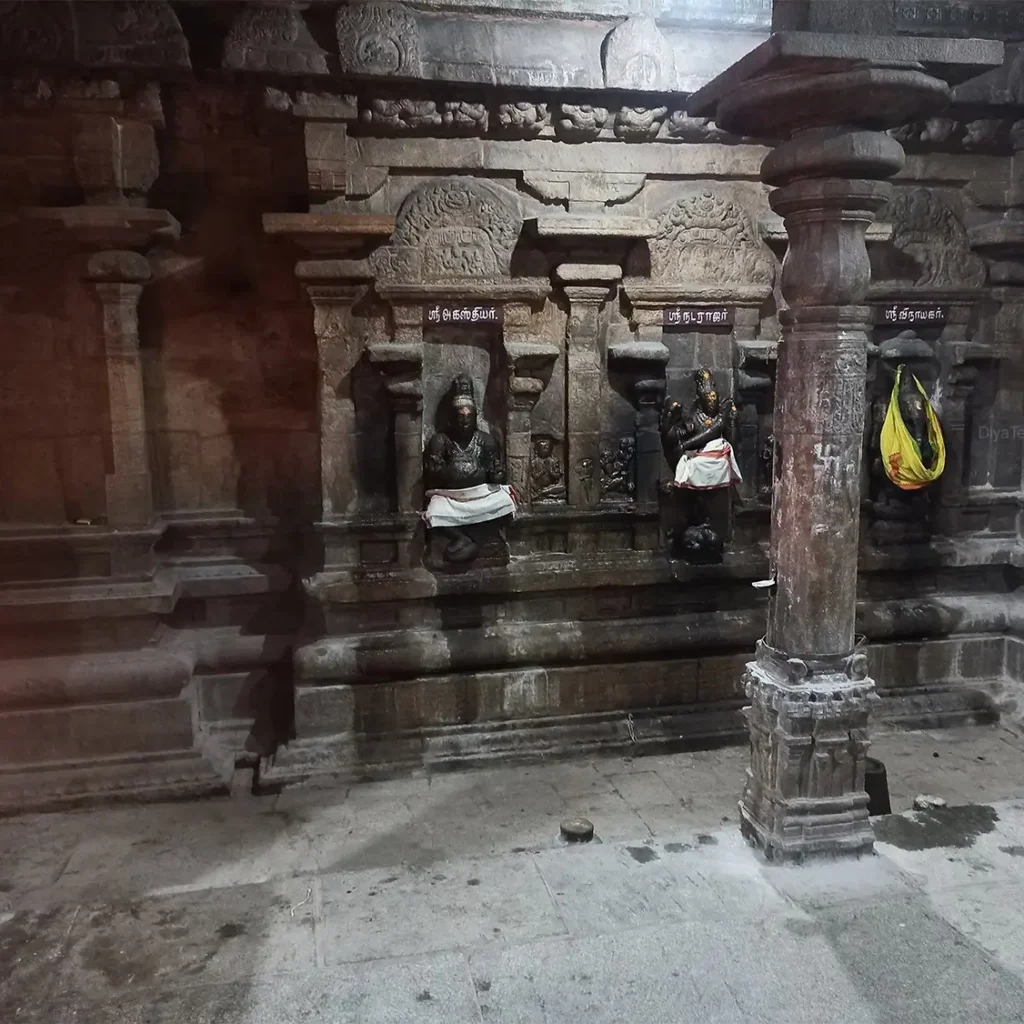
Although Lord Naganathaswamy is the main deity, the spiritual experience doesn’t end there. If you walk little bit from the rahu bhagavan santum you can find a small place for purchasing prasatham. As you walk around the temple, you’ll come across beautifully maintained shrines dedicated to Brahma, Goddess Parvati, Vinayakar, Murugar, Mahalakshmi, and Saraswathi. There are also sanctums for the 63 Nayanmars, Sage Agathiyar, and Sekkizhar, each adding to the temple’s rich spiritual heritage. One small tip from my visit—don’t leave without seeing the 10 Shiva Lingams located beside the Rahu sannidhi near the Kubera Theertham (well). Many visitors walk past them, but it’s a peaceful spot that’s definitely worth a few extra minutes.
Tip for visitors:
Carry some cash to purchase garland and flowers required for pooja. Since most of the vendor accepts digital payments it is safer to carry some cash.
Final Thought
After visiting multiple Navagraha temples, things can start to feel repetitive.
Thirunageswaram breaks that pattern slightly—not because it’s calmer, but because it gives you something to observe.
Whether you see it as belief or just curiosity, the experience stays with you a little longer than expected.
Frequently Asked Questions About Thirunageswaram Rahu Temple
What is special about this temple?
The milk during Rahu abhishekam is believed to turn blue.
When should I visit?
During Rahu Kalam for the main ritual.
How far is it from Kumbakonam?
Around 6 km.
Is this part of Navagraha temples?
Yes, it is the Rahu Sthalam.
What is the cost of milk abhishekam?
The cost of milk abhishekam is 150 to 250 INR.